Showing posts with label journalism. Show all posts

Monday, 2 September 2013

Storify and Science Journalism

For university this semester we were required to write and publish an article on a science topic of our choosing. Below is the story I created.


This link takes you to an analysis of the program Storify that I used to create the story.
Happy blogging!

Wednesday, 13 June 2012

What's in it for me?

Final Lecture - 28/05/12


I Am The Journalist!

The final lecture of JOUR1111 really did have a finale vibe. However Steve Molk, television blogger, knew exactly the right words to say to get my journalism juices flowing!

What we do with our brand, thanks to the power of the internet and social media, starts now. We are responsible for our own future and we now have the ability to get in touch with everyone and anyone if we take control

So from today, I am making the firm decision to continue running this blog (although once this has been marked for the final time I will be changing the URL to something a little more personal...) and keeping my opinion coming, while strengthening the writing muscles that will in turn become my future portfolio to my perspective employer.

Bring it the hell on!

Investigative Journalism

Lecture Week 12 - 12/05/12


Change the world, one truth at a time.


Since I decided as a 13 year old naive girl who finished reading her first Hunter Thompson novel that I wanted to become a journalist, investigative journalism has been my hearts desire. The lecture on Investigative Journalism opened on a really interesting thought - that most good journalism is, or should be, investigative journalism. I couldn't agree more!


For those who aren't familiar with investigative journalism (and, lets face it, Today Tonight and A Current Affair have altered a mass nations perception of true investigative journalism), investigative journalism is about discovering the truth and identifying the lapses from it, and exposing what someone somewhere wants to suppress. Journalists however need to use innovative and reliable methods and traits to pursue these stories:
 INTELLIGENT
 INFORMED
 INTUITIVE
 INSIDE
 INVEST
The purpose of investigative journalism is to use critical thought, be custodians of conscience, a voice for those without one and act as a fourth estate or a Government "watchdog" to protect and serve the population (minus weapons and force).

A huge trait is we need to be as journalists skeptical NOT cynical! In my opinion, this is where commerical media companies like ACA and TT fail at providing for the people. Ethics ALWAYS  matter in journalism.

The truth of the matter is whether you're looking at Julian Assange and Wikileaks, or the author of this wonderful article regarding homophobia and Gloria Jeans, investigative journalism has the power to change the world.


Tuesday, 12 June 2012

Agenda Setting

Lecture Week 11 - 14/05/12


Our Chosen Reality


Agenda setting is the reality that describes the ability the media has on influencing the salience of topics on the public agenda. Reality is shared and constructed through social life, and the media plays a huge role in the mediation of that social life.


Public media (what the public perceives as important), policy agenda (issues decision makers think are salient), corporate agenda (issues big businesses and corporations think are important) and the media agenda all overlap and influence what we are subject to in news stands, on Facebook updates and office conversations. The mass media presents certain issues more frequently and prominently (in regards to news values) so that the general public perceive it as more important. In summary, the media has the ability to filter and shape what we perceive as important, and in turn shape our reality.


While you may think this holds several ethical issues, it does not (at least in most cases) intentionally manipulate viewers. The mass media instead is inadvertently focusing the news, but this does not mean it is devoid of problems. Questions we can ask ourselves as a reality check include:


  1. Media Gatekeeping - How do individuals control the flow of messages and what the media chooses the reveal?
  2. Media Advocacy - is there a purposeful message?
  3. Agenda Cutting - Is what happening in the world truly represented?
  4. Agenda Surfing - "Bandwagon effect" as the media follows and creates trends.
  5. Diffusion of News - Who decides how, when and where the news is released?
  6. Portrayal of an issue - different aspects regarding different news sources
  7. Media Dependence - Why is there a growing need for Facebook/Twitter and instant access to information?
All of these are things to keep in mind when consuming the news, in any form.

News Values

Week 10 - 30/04/12

Pick Me! Pick Me!

News Values (sometimes also referred to as news criteria) are the elements that determine what prominence a media outlet gives to a story, and the audience reaction to it as a result. In simplest terms, news values are determined by the following"

IMPACT- Makes you say "Gee, whiz!"
AUDIENCE IDENTIFICATION - relating to viewers.
PRAGMATICS - the 24/7 news cycle needs all news to be current!
SOURCE INFLUENCE - regarding public relations

These change depending on the news outlet, the news values will be different, for example a local newspaper will focus on local stories leading, where a nightly news broadcast on a commercial network will most likely adopt the "if it bleeds it leads" policy.

But why are they important?

News values determine what gets reported on with prominence, and journalism is often called "the rough draft of history".
Need I say more?

Ethics

Lecture Week 9 - 23/04/12


Right or Wrong?

In the media we are often faced with a moral decision we must make in regards to what stories we persue, how we persue them and how we portray them to the public. However, the increase in technological advances has meant laws struggle to keep up to protect individual rights and the question what is right, and what is wrong is increasingly hard to answer.


There are 3 main types of ethic models in regards to Journalism in use today:
  1. Deontology - the normative ethical position that judges the morality of any action by following the rules, pricipals and duties of a Journalist.
  2. Consequentialism - idea that it doesn't matter how you get there, the end justifies the means. The idea of the greatest good for the greatest number of people.
  3. Virtue Ethics - the intrinsic values of courage, justice, temperance, prudence and "golden mean" of behaviour through habits of character.


While there are many codes available outlining Ethics and Morals in journalists, often they are not followed. Advertising has led the greater public to confuse what is considered ethical, with that of bad taste, mixing there own perceptions and projections with the reality.


Although this one has got to be an advertising campaign I can't believe got approved:

A Fitness First advertisement that lights up how much you weigh as you sit on the seat waiting. Not only for yourself to see, but the whole public. If anything, it makes me defintely not want to join Fitness First! What if someone is dealing with body weight issues?
What do you think?

Thursday, 24 May 2012

Assessment - Annotated Bibliography


ANNOTATED BIBLIOGRAPHY


Reese, S., Rutigliano, L., Hyun, K. & Jeong, J. (2005) Mapping the blogosphere: Citizen based media in the global news media. Austin, TX: University of Texas School of Journalism.

The authors, researchers at the University of Texas, analyse the link between weblogs and mainstream media internationally. They investigate this by specifically analysing the top 6 major news and political blogs that generate the most traffic, as well as track the sites they lead to. Their findings suggest that globalisation and the internet have in fact lead to a more complimentary relationship between weblogs and traditional journalism than previously assumed. The journal article discusses how weblogs act as an important secondary market for material to push readers to what they otherwise might not have read as blogs can be aligned with individuals and/or communities. Conversely, the commercial journalism traditional role is that of being unable to take readers off their own web pages. The study found weblogs have also allowed for a greater encouragement among readers to discover more about an issue as the location of ‘authority’ has been changed promoting higher citizen interactivity and a shift in the global news agenda. The opposing view of our reliance on blogs is also included greatly reducing bias. The significant use of citations throughout the journal article and access to the findings in comprehensive tables adds credibility to the view of blogs and citizen journalists improving media.


The following 3 annotated works are all online articles in relation to the announcement of the selection of the Australian Wheelchair Rugby team. Through different means of webpages they have all taken different approaches in announcing the selection, and subsequently different reactions to readers.


McDonald, M. (2012, May 21). Ryley Batt spearheads Australia's tilt for wheelchair rugby glory. The Australian. Retrieved from http://www.theaustralian.com.au/sport/london-games/ryley-batt-spearheads-australias-tilt-for-wheelchair-rugby-glory/story-e6frgdg6-1226362772913

Margie McDonald, the author, works as a sports journalist for The Australian, giving her decent credibility particularly related to sports reporting. The article outlines Ryley Batt’s recently announced selection in the Australian team emphasising his goal to win a gold medal in London 2012. The article is mostly direct quotes from Ryley Batt, and as a result further emphasises credibility as it is straight from the source. However, the article on the website does not make use of any ‘tags’ and has not once been ‘shared’ on Facebook social media plug-in. This lack of tags makes the article inaccessible and unless someone was specifically searching for ‘Ryley Batt’ or ‘wheelchair rugby’, it is very unlikely they would find this article. The only other person quoted in the article is Jason Hellwig, APC chief executive and London chef de mission, from a press release regarding the completion of Paralympic Stadium days earlier that subsequently add no additional value to the article regarding Ryley or the Wheelchair Rugby team. The author concludes with further quotes from Batt, leaving a bias impression as the article showing no significant indicators of research or fact checking by the journalist reflecting the tabloid nature of The Australian and the large amounts of news articles they are required to produce daily.


Steelers set for London Paralympics. (2012, May 4). ABC News. Retrieved from http://www.abc.net.au/news/2012-05-04/steelers-set-for-london-paralympics/3992242

ABC News is a public news company, rather than commercial, gaining credibility immediately. The article outlines the selection of the Australian Wheelchair Rugby team and has interviews from the team coach, star player Ryley Batt and Jason Hellwig (Australian Paralympic Committee CEO). The article also contains tournament results, dates of the Paralympic and concludes with a list of all selected team members. This article is greatly informational and by providing information on a whole team instead of singling out one player it balances the weight of the article. Accessed online, this article makes use of multiple ‘tags’ and has been ‘shared’ on Facebook social media plug-in once. By also being part of the 24 hour news cycle, the focus is less on feelings, and mostly on facts regarding the team and their goal for gold at the Paralympics. However, the author has chosen to include that the Australians can’t afford to be complacent about the early stages of competition, emphasising that there is still competition and no victory yet. The article is also accompanied with an on location photo of Ryley Batt playing Japan (during the tournament the team was announced) further adding credibility of the article.


Bond, C. (2012). Chris Bond: Training to medal, not just to impress the girls. International Paralympic Committee. Retrieved from http://www.paralympic.org/blog/chris-bond-training-medal-not-just-impress-girls

Chris Bond has written this blog post in first person about his own journey and feelings regarding his selection on the London 2012 Paralympics team for Wheelchair Rugby.  This style of writing adds credibility as we are privy to the stream of conscious style writing including what they feel is important from one of the players rather than a journalist’s interpretation and editing. As a new player, rather than returning star Ryley Batt, Chris’s opinion is different to any currently available in the news as other players are often overlooked.  This works in favour, as the article is fresh and new, yet the comparison of himself to Batt gives readers someone to identify with and become interested in the article. Bond makes use of a light-hearted approach discussing how he never expected to be in a wheelchair, let alone represent Australia providing again a subject to relate to and empathise with, rather than just straight facts. This page has been ‘shared’ on Facebook social media plug-in 79 times. By being on the Australian Paralympic Website, the article is also directly available to people most likely to be interested, while adding even further credibility for a story surrounding the Paralympic games.


Having read these 3 citations, it is clear the use of ‘citizen journalists’ with aid from globalisation and the internet can in fact influence journalism in a positive way. The angle of the last story by Chris Bond was so easy to understand and relate to that it had the most ‘shares’ on Facebook, which in turn means its audience was much larger, particularly to that of the first article which did not even use tags for the article to be found online. However, regardless of platform or author, all articles maintained credibility and provided audiences with different and appealing approaches to the same story whilst somewhat proving the “Mapping of the Blogosphere” idea that blogs and news articles are becoming blurred, true.

Saturday, 12 May 2012

The Highly Sensitive People Network

This morning I decided to check the Highly Sensitive People Network Facebook group. A few days ago I shared my video to the admin of the page, hoping that if even one person watches it, I will have succeeded with what I set out to do, and that is help people who identify with H.S.P. traits.


To my absolute surprise, not only had the pages shared it on the wall (with then other people sharing the page from that post) but there were some really heart warming and wonderful comments left by people who had watched the interview.


I went to the YouTube channel to see how many people had watched it, and for something I thought maybe a dozen people would watch, it's almost sitting on 200!!


It made it even more special that my dad found the link and has become someone people can identify with, and relate to. And, I honestly can't believe there are people who are sharing my video with their doctors! I am absolutely overwhelmed


For a first time interview, and telling someone's story - even if for the assignment I may have lost marks because of the length, I do not regret leaving in a single second of this YouTube video after seeing this result.


And this is why I want to be a journalist!


What a wonderful way to start a morning!

Saturday, 28 April 2012

Speaking of today's election...

I woke up this morning to yet another ad campaign for Ray Smith that I hadn't seen before. Now this one happened to include images of damaged roads and an explanation about how the previous council failed in basics.
Yes, I can vouch for this to an extent.
On Brisbane north side our roads are still full of road damages that only get worse every time it rains.
For JOUR1112, I reported on a story that I started before anyone had made a single mention of road damages. After pestering the politicians in my ward, in the last week they changed policies leaving a lot of very confused residents. Rhys joked around that I started it, but I like to think I had some influence ;)


Here is my article:


NORTHSIDE STREETS STILL STURGGLING


The Brisbane flood aftermath has left streets on the north side still suffering and they won’t stop any time soon.

One of many inadequate drains on busy Zillmere Road
Many main and busy streets including Zillmere Road, Handford Road, Beams Road and Robinson Road East faced constant flash flooding this wet season and remain littered with pot holes, inadequate drainage systems and dangerous quick fixes in attempted repairs.

The Summers of 2009/10, 2010/11 and 2011/12 have seen 484.8mm, 952.6mm and 638.0mm of rain respectively, all classified as ‘high’ recorded rainfall according to the Bureau of Meteorology.

While the ‘la nina’ weather pattern over Brisbane that caused the severe rainfall for this wet season has now broken, the damage remains the same, and is likely to worsen next Summer time.
The streets became a danger to both pedestrians and motorists as sink holes were opening up damaging vehicles while pedestrians were made to wade through rising flood waters on busy roads with no alternative routes. One sink hole opened in Geebung to measure over a 1 metre diameter before anything was done about it.

The loss of Labour in the March election meant Leanne Linard (ALP), who was planning on addressing these road problems has now stepped down. The newly elected NLP Member Jason Woodforth’s focus is instead centred on “cutting costs”.

In the upcoming Brisbane City Council election the focus for the Deagon and Bracken Ridge Wards roads are familiar. The representative responses of Victoria Newton (ALP), Gordana Blazevic (LNP), Georgia Farrell (Greens) and John Harbison  (Independent) all believed that the focus regarding transport was on the much needed Geebung overpass and nothing at this stage was on the table for road repairs.

Yet in local letterbox leaflets distributed through the week, Ray Smith announced an $800 Million Local Roads Package to be used on road maintenance for flood aftermath if elected, but north side suburbs have again missed out. The package does not include resurfacing or maintenance.

“In the last 4 years, the current Council Administration has failed to deliver more than half of their promised Road Action Plans and our roads have been left in a deteriorating state,” Ray Smith explained in a press conference this week.

The elections this year have meant a backlog of promises from politicians without any clear indicators they will honour them. The added confusion of last minute changed minds and policies regarding budgets have left residents fed up.

“It really is an important issue. It’s becoming quite dangerous when it rains,” said north-side resident Paul Hoffman, “It’s definitely going to affect how I vote.”

Friday, 27 April 2012

Trevor Newton - Highly Sensitive Person.

JOUR1111 at University of Queensland Assessment 3
Factual Story Telling


Cailey, Ben, Myself and Trevor. 


Trevor has had many huge challenges in his life time. He married young, was the father of a disabled child, divorced and has suffered with being put into labels of 'depressed' and 'anxious' through his adult life.

In 2010 Trevor became aware of 'HSP' and since then has come to terms with accepting himself.


Trevor is my father, and having seen him struggle for many years accepting himself I could not think of a better story to tell than his. In an intimate interview with him, we recorded over an hour of what now defines his way of life, and how he has finally found happiness.


For more information on HSP, visit www.hsperson.com


If you or someone you know is struggling with depression or anxiety, help is always available.
Visit: www.beyondblue.org.au 

Phone: 1300 22 4636
Email: infoline@beyondblue.org.au

Tuesday, 17 April 2012

Public Media

Lecture Week 8 - 16/4/12


"The difference between commercial broadcasting and public media is the difference between consumers and citizens." - Nigel Milan (former Managing Directer of SBS)


What a great little quote. A quote that very much sums up my own opinion in a, lets be honest, much nicer way. Now, we all remember commercial media is profit driven. The definition of public media is:


"In general, a media whose mission is to serve or engage a public...it may be for profit as long as it's ultimate goal is to serve the public and not to turn a profit.
- WGBH Educational Foundation Conference Open Content and Public Broadcasting (19-21 September 2006)

The main reason's why we need Public Media are
  1. Public Value - embedding a public service ethos
    - Value for licensing fee
    - Weighting public value against market impact
    - Public consultation
  2. Geographic universality - access to the whole of the country
  3. Universality of appeal - cater for all interests
  4. Special provision for minorities - eg, SBS in Australia
  5. Relationship to the sense of national identity and community - National building, heritage, identity and conversations
  6. Distanced from all vested interests
  7. Liberate rather than restrict broadcasters
Public media has a huge role on impacting a country, and ensuring those companies which are purely commercial and ensuring the public has access to many different avenues of not only news but of light entertainment. A huge area of this though is the news where Public Media really is in place to ensure we are able to have a less bias account of the news, as we trust public media news more than we would trust news programs such as 'Today Tonight' and 'A Current Affair'. 

41% of Australian;s get their news from ABC, however, there is the argument that public media news can be elitist, of limited interest and possibly out of touch as some people would prefer to watch news casts such as 'The Project' rather than ABC 7pm News. Public media is getting less prominence, and investigative journalist is slowly decreasing as we as a world have less resources in Journalism. The problem with this is that investigative journalism is the journalism that changes the world, and acts as a reality check to many companies, individuals and even nations.

While Public and Commercial media outlets are very different, they do have the same challenges. They both need audiences. To sum it up: Without an audience, there is no ratings, without ratings no profit, without profit no journalists.

Basically, like any media outlet, public media must follow the Journalist Code of Ethics to remain honest, independent and relevant. The Australian code is found here.

It is safe to say it is a hard road ahead for Journalists in yet another area. It seems the more I study this course, the more I'm being persuaded to take a different career path... But what is rewarding if it's not a challenge?

Tuesday, 10 April 2012

3 Cheers for QPS...

If you've managed to find yourself under a rock, and missed what happened this Easter long weekend in Brisbane, let me fill you in.

  • Sunday night in Zillmere 4 men fled in a stolen vehicle and were followed by police
  • The driver charged through a police road block and towards an officer causing shots to be fired with 1 man injured with a shot to the leg
  • All 4 were arrested
  • Monday morning a Brisbane task force named "Taskforce Kilo Perpetual" was launched as the 4 men were part of a wanted 30 for over 190 offenses in the past 4 months
  • Approx 2 hours later, 2 stolen cars became part of an over 2 hour long car chase across Brisbane City, tracked by Seven, Nine and Ten news helicopters to assist police
  • After successful use of road spikes, the cars came to a stop at a Shopping center, leading 7 young men ages 13 to 19 to be arrested.
  • The man who drove towards the police on Sunday night has since been charged with attempted murder and the other men face a variety of punishable offences ranging from 14 years to life if found guilty in the coming days.
Police arresting a suspect at Mt Ommaney shopping center Monday afternoon.
Picture: Glen Barnes. Source: Courier Mail
I have had a few thoughts racing through my head since this has unfolded and I sat in front of my television, while constantly refreshing twitter to learn the news as it happen. The first, of course, is how absolutely AMAZING it is that we have the news literally as it happens. If you have read any of my other blog posts, you're probably aware by now that I have a love-hate relationship with the media...

Well, today my friend, is one of love. And for many reasons...

For one, QLD Police only recently received their first helicopter, based on the Gold Coast. In moments like these (no matter how rare they are) this does seem like a minor oversight. Without the commercial media's use of helicopters tracking the separate cars and relaying the information to the police, catching the cars would have been, lets just say - much more tedious
MEDIA - 1
EMILY - 0

The news was literally instantaneous. I was able to receive a tweet from someone at ABC, and next thing I know, the information is being relayed over my television set with images to match. The power of social media, web 3.0 and the media making use of such powerful tools created a huge awareness of what was going on, to further assist in bringing justice.
MEDIA - 2
EMILY - 0

As for Zillmere, I did notice over the past few nights odd police behavior along Zillmere Road (which happens to be where I live, with lovely windows looking right over onto the street). My partner and I had had conversations about 'what are they up to?' and 'who are they going to catch?' only to be out maneuvered by clever police tactics and precautions. Heck, I felt safe in my own suburb when literally meters away road blocks were being set up, of which we knew nothing about until reported on the media. The Queensland Police have again reinforced why I feel safe somewhere where others might be quick to judge for a suburb that is currently in the news for some very serious crimes. Not a single person was injured, other than those committing crimes and resisting arrest, and in the end, the bad guys got caught. Not one alarm bell in my head went off...but I still like to think I am savvy and noticing their odd driving behaviors makes me in the loop ;) who knows, I could be a crime reporter yet!
MEDIA - 1
EMILY - 0
QUEENSLAND POLICE - 9999999999999999999....

Well done, QPS! For now I know I am safe, and my faith in Australian Media (at the very least) has been restored.
Plus, I like to imagine some 'The Raid'-esk moves going down in some apartment building near by....you never know!

Thursday, 5 April 2012

Factual Story Telling - Sound

Lecture Week 5 - 26/3/12

Now, listen here!
"Radio is a much more intimate medium" 

I never thought much of radio. I was never one to listen to much radio. I tried pod-casts on my iPod, but never had the time to focus on the conversation, and conversation is what sets is apart from other means of reporting. 

I must admit upfront, while listening to our sound lecture I did have troubles being "genuinely interested" in the whole thing that was reiterated as being a hugely important thing in radio journalism. I often found myself wandering on to other web pages, or checking my twitter to see what was happening in the world instantly. Basically, I have been brought up in a world of instant social networking where when I think of something I can Google it.

However what I did learn was the often calm and relaxed mood of a radio interview in comparison to print or television (in most cases) via the use of humour and trying to make them act like a "normal human being". This is possibly why radio is able to withstand the changing technology and the power of downloading a pod-cast, because it is so informal and casual in comparison. For all I know, you could be sitting in your underpants drinking coffee talking into the microphone...But maybe that is just my imagination running away with me.

My favourite part was the closure of the interviews - "if you really want it, don't give up."

I managed to get to the end of the interview, and while my mind has been opened, I'm still not sure I am one to listen to radio...

Wednesday, 4 April 2012

Factual Story Telling - Vision

Lecture Week 4 - 19/3/12


Power of the Picture


It is only fitting to follow a week of text journalism with developments in photojournalism. As we've heard many times before, a picture is worth a thousand words, but I believe it is worth so much more. Images are what we remember, images are what stays in our minds when we've finished reading an article.


Most of the things in the Lecture I had seen it all before (as the images have burned into the back of my retina's from previous years) so I instead spent my time contemplating the power of images in the media, and the detrimental effect it can have.

Yes, I point the finger to certain Media outlets using Photoshop negatively when we are seeing what seems like more younger generations coping with depression and  anxiety issues, struggling to accept themselves. But how do we encourage them to accept themselves when even the most 'beautiful' celebrities are edited and made to be look like 'Gods'. It's creating an unattainable beauty, and the continual concept of 'thinness'.


The video we were shown by Dove only cemented my own opinion.


The power of images are somewhat underestimated. Images of young women sell everything - from cars to scarves. We are constantly bombarded with images of 'perfect' women in the Media, be it advertising or celebrity news. It's been revealed in studies that women who are self conscious about their bodies are those more likely to spend more money on cosmetics and on celebrity magazines. It is a vicious cycle that could easily continue to be detrimental to impressionable young women's minds.


But lets focus on the other end of the spectrum.
What makes a great photo?
"A picture has no meaning at all if it can't tell a story." - Eetu Silanpaa
Sums it up perfectly.

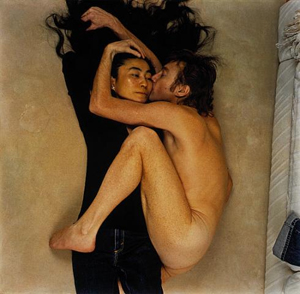
 December 8, 1980 John Lennon Rolling Stone Magazine Cover shoot
Annie Leibovitz - American Portrait Photographer
Perhaps best known for the famous last photograph of John-Lennon. Working for Rolling Stone Magazine, she had an understanding of what makes a good photograph.


Leibovitz utilized a then-new use of new colours, lighting and continues to astound audiences time and time again with images that tell amazing stories.


I think what is most  brilliant about her work is not only her ability to make use of regular techniques of framing, rule of thirds, leading lines (the list goes on...), but rather her ability for us to see within the people she photographs
.
Her images do not need editing on Photoshop to remove what society has labelled as 'imperfect' and in the cases she does use Photoshop, it is to portray a greater beauty and emotion than before, rather then hinder it (such as in her Disney themed photo set).


Leibovitz's Disney "Dream" photo set
I think, we need to be careful about what we put out there. We are aware of how powerful images can be in 'making or breaking' a story, but we need to realise it goes both ways - they are vital to making or breaking self esteem too.

Tuesday, 3 April 2012

Media in War


For university I am currently enrolled in a double degree – Journalism/Arts.  I took a year off between High School and university to work to afford to study, as well as take a look at what it was in Arts I actually wanted to major in. And 6 weeks in to my courses, I’ve already decided on 2 majors.

Let’s just say so far, the Peace and Conflict Studies introductory course has absolutely blown my mind, and reminded me what I am doing with my life. Last week’s lecture was on “The Role of Media in war and Peace” and I have had an inspiring and eye opening 6 days between then and my tutorial that finished exactly 23 minutes ago as I write this.

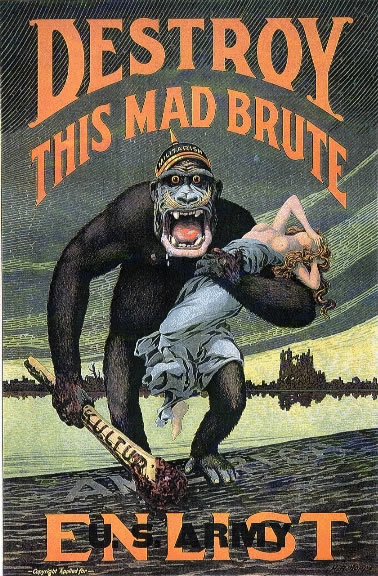
Example of WWI Propaganda
The roll of media, as we’re already aware, is ever changing, and constantly being remade as technology advances. As consumers, we are taught from an early age to be up to date with current affairs, and the importance of watching the news of an evening.

However, what I am sure many of my peers are unaware of is the power of governments to turn the media against its audience. A classic example is the conscription campaigns of WWI and WWII of both allies and enemies.  We were shown soldiers as heroes, portrayed as national icons, and while I admit, Australia is not as bad as the United States in this aspect, (for one, WWI was not forced conscription) this propaganda was then used against those who didn’t go to war either, being made to wear white feathers to show their cowardice if they had not fought in the war.


Fast forward to the Vietnam War, and you have the opposite. The complete shift in technology meant people were reporting on every aspect of the war, to the point where it was violence that caught our attention. At first we were shocked as we learnt the true aspects of what fighting the war was costing. As we came to terms with civilian deaths and how our own soldiers were dying, the Government lost support. But soon this changed and the same trends we have in Hollywood movies, we moved on to real life. I like to believe there are many journalists that worked with the best intensions, but the shift to a capitalist economy made the newspaper saying: If it bleeds, it leads. It was now the extreme opposite, the media become almost emotionally involved with the war, and we lost the independent 3rd perspective we needed the media to be. While definitely better than false information feed by the government beforehand, this was in no way 100% accurate either. We were privy to the absolute worst of the war, and as America’s Pentagon so graciously believes the war was lost “because of the media”.

Consequences of the Vietnam War have lasted much longer than the actual blood shed on the battlefield. After that, the United States Government sent out to make a point. Their next war against Grenada, was a complete media blackout until the war was over, which the United States easily took victory. Of course, Journalists everywhere were outraged! What about human rights?! What about the Right to Information, or the Right to Free Speech! The United States responded by basically saying “there will be x amount of journalists at any one time, to report in x area on x days and whatever you write, must be submitted for review before it is published”. And, again we were outraged!!


Or, were we?

The Pentagon did an excellent job distracting us. And, I mean excellent! Currently this system is still being used for War-zone reporting. The Army will decide who will report, what place they will report, and what days they will report – with the excuse that it is for “their own safety”. To me, embedded journalism just isn’t good enough.

Since I was about 13 years old after reading Aldous Huxley’s Nineteen-Eighty Four and once I first understood how Governments have the ability to censor media, I promised myself one day, I will be reporting the truth from a war zone. Regardless of the risk or dangers, as journalists it is our duty to report not only the truth (as we did in Vietnam) but the WHOLE truth. I look up to Kevin Sites, who utilised new technology and published on his blog what others were afraid to do, only to be kicked out of the war, and lose his job. He was not afraid. He was honest, and to me, that is the very best quality any journalist can attain.

In class, we are always hearing that we need to “get outraged!” as a journalist.


Well, today, I am extremely outraged.


Please, if you have not already, watch this Documentary. You will be outraged too.

Thursday, 29 March 2012

Media Use and Production Diary

Click-y click.

Whenever I sit in Central Station, I notice the people surrounding me absolutely enthralled with their smart phones. Judging by these behaviours, I imagine that they too would be surprised with their amount of media usage...


So, what was it that surprised me?

The interesting perception I made was as I used media I was usually multitasking. Most frequently I found myself on Facebook and “studying” at the same time.
Surprisingly, I was so interested in my own habits that I started the assessment again (I know, crazy right?!).
 I divided my media use and production diary into whole hours spent using media platforms (whole hours out of my entire day) and underneath I recorded the amount of time I was spending using particular media on those platforms (including hours multitasking).


Media usage measured in hours over 10 days
Media Used
1
2
3
4
5
6
7
8
9
10
TOTAL
Desktop Computer
 Study
 Online Newspaper
 Facebook
 Tumblr
 Emails
 General Web Browsing
 Blogger
 Twitter
2
1
0.25
1.5
1
0.25
0.5
0
0
1
0.25
0
0.5
0.5
0.25
0.5
1
0.5
3
1
0.5
2
1
0
1
1
0.25
3
1.5
0
2
0.5
0.5
1
0
0.25
1
0
0
0.5
0
0
1
0
0
0
0
0
0
0
0
0
0
0
0
0
0
0
0
0
0
0
0
0
0
0
0
0
0
0
0
0
2
1
0.5
1.5
0.5
0.25
1
0.5
0.25
1
0.5
0
1
0.5
0
0
0
0
13
5.25
1.25
9
4
1.25
5
2.5
1.25
Laptop Computer
 Study
 Online Newspaper
 Facebook
 Tumblr
 Emails
 General Web Browsing
 Twitter
0
0
0
0
0
0
0
0
0
0
0
0
0
0
0
0
0
0
0
0
0
0
0
0
0
0
0
0
0
0
0
0
3
2
0.5
2
1
0.5
1
0.25
4
2.5
0.5
3
2
1
1.5
0.25
4
3
1
3
1
0
2
0.5
5
3
1
3
2
1
2
0
2
1
0
1
0.5
0.25
0.5
0
1
0
0.25
0.5
0.25
0.25
1
0
19
11.5
3.25
12.5
6.75
3
8
1
Smart Phone
 Calls
 Texting
 Games
 Facebook
2
0.5
0.75
0.5
0.25
3
1
1
0
1
1
0
0.5
0
0.5
4
2
1
0.5
0.5
2
0
0.5
0.5
1
1
0.5
0.25
0
0.25
2
1
0.5
0.25
0.25
1
0
0.5
0
0.5
2
1
0.5
0.5
0
1.5
0
0.5
0.5
0.5
19.5
6
6
2.75
4.75
Television
 News Broadcasts
 Leisure Shows
2
1.5
0.5
2
1
1
1.5
1
0.5
2
1
1
3
1
2
3
1
2
1
0.5
0.5
2
1
1
3
1
2
2
1
1
21.5
10
11.5
Radio
 News Broadcasts
 Leisure shows
0
0
0
0
0
0
1
0.5
0.5
0
0
0
0.5
0.5
0
0
0
0
0
0
0
0
0
0
0.5
0.25
0.25
0
0
0
2
1.25
0.75
Newspaper
 Local
 State
0
0
0
0
0
0
0
0
0
1
1
0
0
0
0
0
0
0
0.5
0
0.5
0
0
0
0
0
0
1
1
0
2.5
2
0.5

Basically, I use a lot of media on a daily basis. I use my desktop computer, laptop and smart phone more than radio and newspaper. While the television is in use for the most amount of hours, I never used it as a primary media source. I found from the total time on certain platforms, I am a true procrastinator.


Separately I recorded hours spent producing content. 


My total media use compared to media production in units of hours

On these websites that allow for production elements, my graph demonstrates I am active in my internet usage.


The most prominent conclusions I came to from my own and the cohort's media habits were:
  •  New Media of the internet and smart phones is in, while old media of newspapers are fading out
  • Facebook really is taking over our lives
  • The immediate accessibility of the internet had both negative and positives


The shift to New Media

Breakfast and dinner with my partner is spent in front of the TV watching news. My results emphasise the amount of time I spent on the internet across various platforms. 79% of JOUR1111 students, including myself, watch less than 2 hours of television a day. Since an average newscast is 1 hour, we can assume, television is in most cases used where we can leave the TV playing in the background, until an important story comes on. The lack of use of radio suggests the same, with 82.9% listening in the car. These old media platforms are now used when convenient whilst we’re engaging in other primary activities. 


The television is still powerful for Journalism, being the main source of News (however, closely followed by Facebook with 48.4% of students) but no longer regarded by a majority as a strong ‘leisure activity’.


Power of social networking

When comparing my results to the rest of the class, I am average in most areas. I have a few different types of social networking sites and blogs, making my internet usage across platforms somewhat excessive. However, what the survey failed to find out was the frequency in which the class happened to log in and check their Facebook accounts. And this was where I must call myself, an ‘addict’. I found interesting statistics that sum up my own usage as a 19 year old pretty accurately:

http://www.flowtown.com/blog/are-we-addicted-to-social-media

I am an avid Facebook consumer, but even more as shown in my graph, I am a Facebook producer. I am engaged in many “Groups” and “Pages” which I am constantly updating and creating comments, photos and messages.
I had no idea I relied so heavily on Facebook, for sharing personal news as well as world news.
Facebook is rapidly growing to be a huge part of Journalism and Communication, whether we like it or not.


Wonders of accessibility

With 77.3% of students using an internet enabled smart phone, we have the ability to constantly be on the internet. Since I bought a smart phone, my media use has at least doubled. Just like the people at Central, we never want to do nothing, because we have the ability to do almost anything.
The positives, however, of the media I could interact with, over 50% overall of my time was spent producing, not just consuming. With new media I am an active member of the online community, something I would never do if it was limited to Newspaper.


What does this mean for journalism?

I asked myself why this was happening and came to the conclusion that these 3 trends are entirely related.
  • The rise in technology has created a surge in ‘citizen journalists’ and the immediate availability of news and entertainment on the internet has decreased the need for old media.
  • Wifi has enabled the use of smart phones or laptops virtually anywhere meaning an increase in use, and subsequent increase in online media use and production.
  • Social Media has penetrated the traditional media types for journalism and communication. Alushka Rajaram of socialmedianews.com says “turn your Television on to any given News channel during a breaking news story and you’ll be greeted with information from Facebook and Twitter at least every hour”. 
  • Not only is the frequency in which these platforms are updated far more impressive than old media, but being able engage in discussion and create content on your own, certainly has a strong appeal, adding to the great appeal of social networking for news.

The Guardian article “Mobile and the news media's imploding business model” suggests there is a “bleak or non-existent future for news professionals in a mobile-dominated world” as the shift to online media has subsequently lead to the loss of profit in Journalism industry, and looking at my results alone, I can completely see why.


Let’s just say after this investigation to my own Media habits, I’ll be putting my computers down for longer, and buying newspapers more frequently…


(Even more fun statistics about social media's impact on the world here.)